Deck Oiling in Melbourne: The Recoat Done Right
Re-oiling is the heartbeat of deck care — the regular coat that keeps timber fed, sealed and looking rich instead of grey. It's also where more decks are let down than anywhere else: the wrong product for the species, oil over dirty or damp boards, or a coat applied two years too late onto a surface that needed sanding first.
Our deck oiling Melbourne service gets the sequence right every time: the deck is properly cleaned (see deck cleaning Melbourne for how we wash timber safely), any raised fixings or damaged boards are dealt with first through deck repairs, the surface is prepared — sanded where needed, using soft-brush (Terrassen-Blitz) or belt sanding to suit the deck's condition — and then the oil goes on in the right conditions to cure properly.
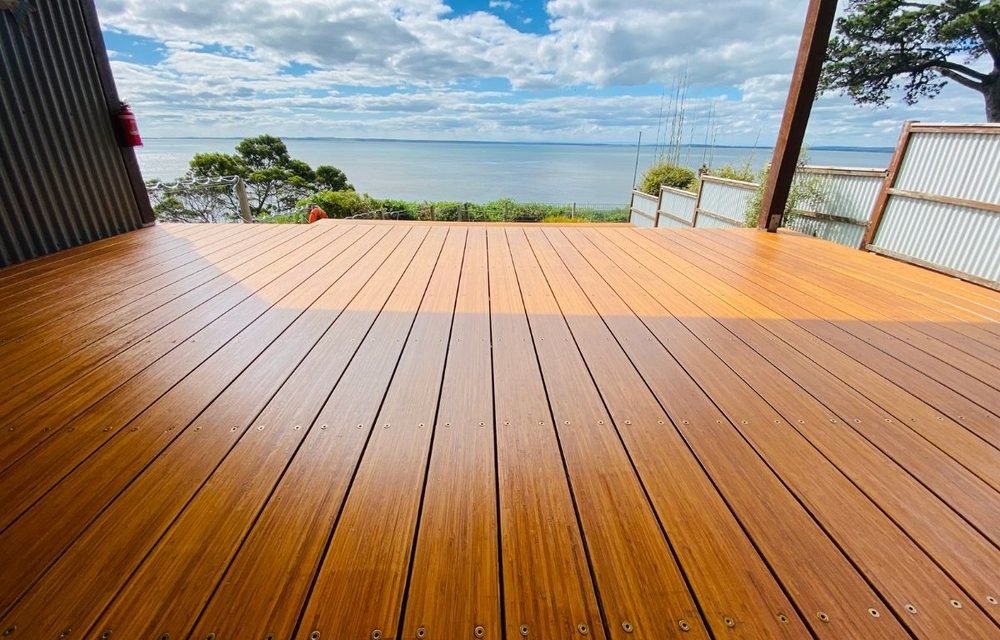
When to Oil, and How Often in Melbourne
The bead test is the honest answer: sprinkle water on the boards. If it beads, the coating is working; if it soaks straight in, the timber is unprotected and due. In Melbourne most oiled decks want re-coating every 12 to 24 months — sun-exposed north-facing decks and coastal decks at the shorter end, sheltered decks at the longer. Two things stretch the interval: keeping the deck clean (grime holds moisture against the coating) and colour choice, which brings us to a rule we share with every client: darker tints last longer. Pigment is UV protection, so a darker oil holds its finish noticeably longer than a natural or pale one. It's the closest thing to a free upgrade in this trade.
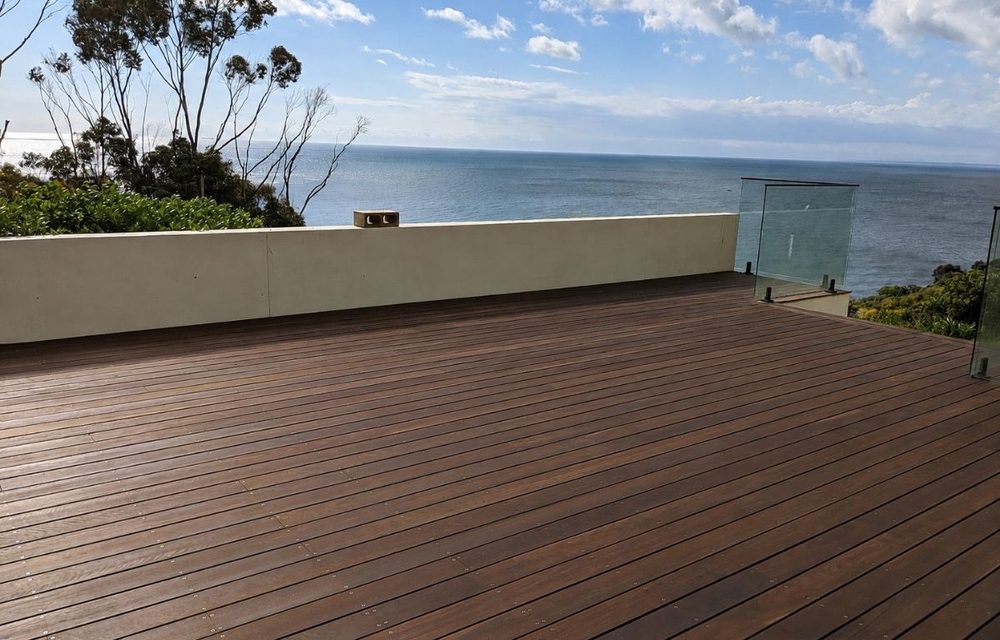
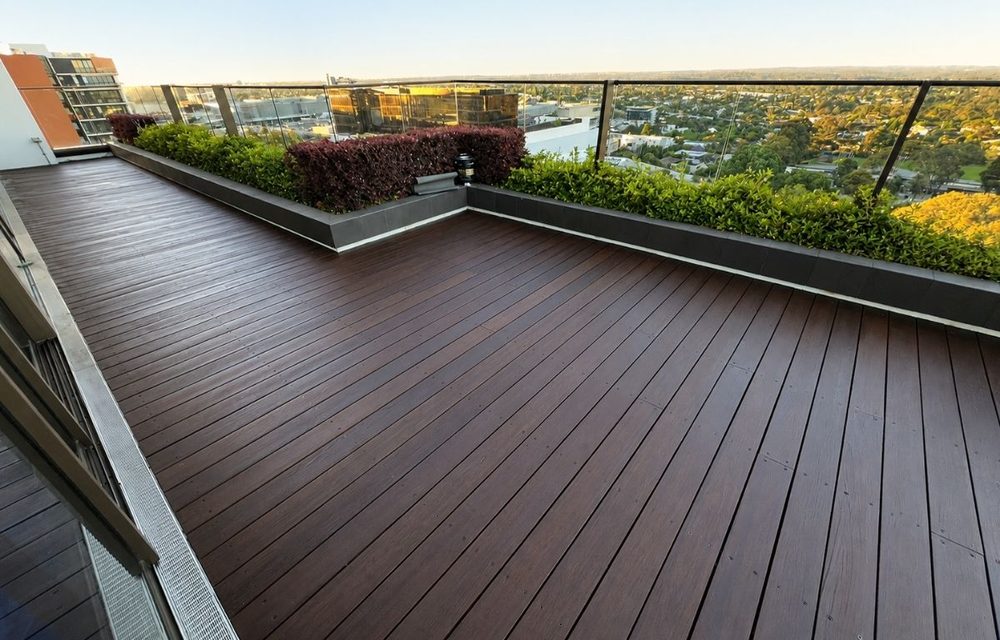
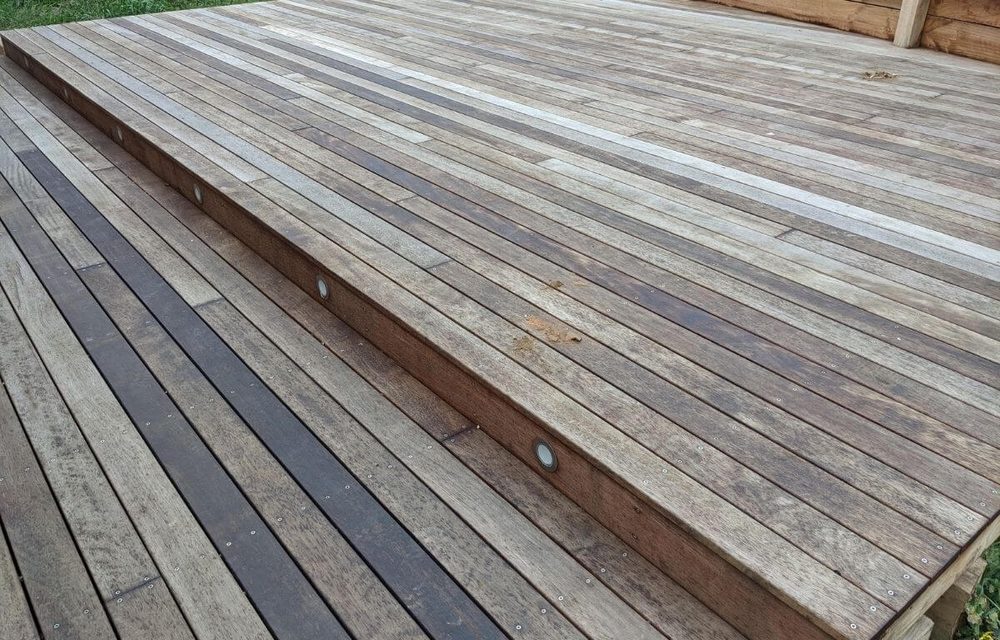 Before
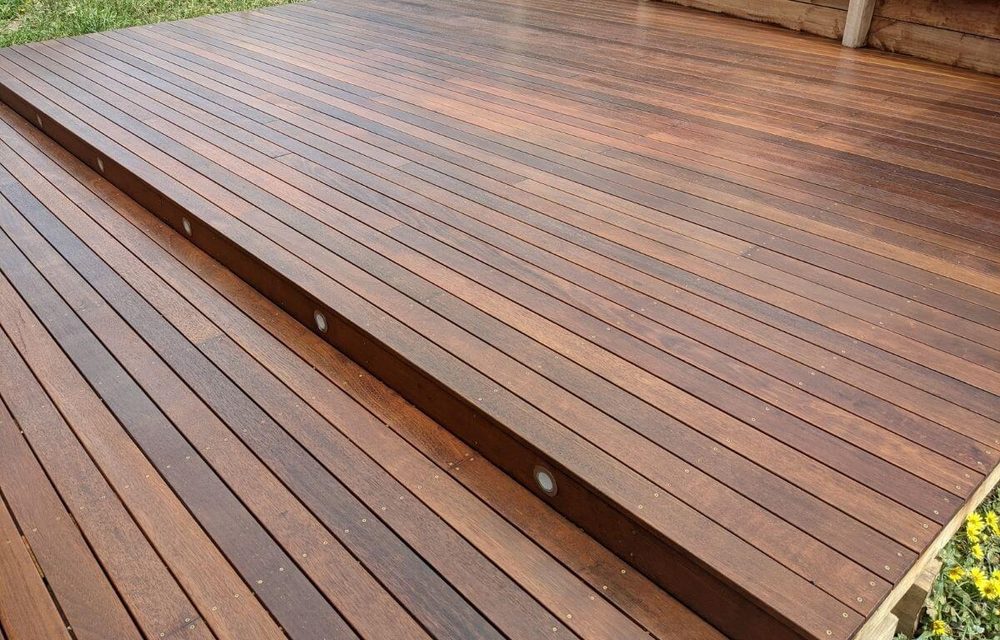 After
AfterOil-Based vs Water-Based Decking Oil
Traditional oil-based products penetrate deeply, enrich the grain and are forgiving to apply, but dry slowly and darken over time. Modern water-based decking oils dry fast, hold their colour, resist UV extremely well and generally last longer between coats — the trade-off is less of that deep, wet-look grain enhancement. Neither is "best decking oil" in the abstract; the right answer depends on your timber, its history and the look you want. Our usual default on Melbourne hardwood decks is Intergrain UltraDeck Timber Oil in Natural — a hybrid that both penetrates and forms a protective surface film, with excellent durability (note it's not suited to treated pine). We also work with Cabot's Aquadeck on the water-based side and Feast Watson's range, and we'll recommend based on your deck, not a default.
Merbau Decking Oil: Melbourne's Most Common Job
Merbau is Melbourne's dominant decking timber, and oiling it well means respecting two of its habits: it bleeds tannins in its early seasons (which is why new Merbau gets washed and settled before its first proper coat), and it silvers quickly once unprotected. A well-oiled Merbau deck is one of the best-looking surfaces in the trade; a neglected one goes grey faster than almost any hardwood. If yours has already silvered, oiling alone won't bring the colour back — that's a sand-and-oil job, and we'll tell you honestly which side of the line your deck is on.
Deck Sealing: Year-Round Moisture Protection
Deck sealing is the protection side of the same coin. Where oiling is about feeding and finishing the timber, a deck sealer's job is to keep water out of it — through winter rain, pooling, and the wet-dry cycle that opens grain and rots boards from the inside. Some products do both jobs at once; some decks benefit from a dedicated penetrating sealer. We can seal decking with an oil or a penetrating sealer to suit the timber, its previous coatings and its exposure — the right sealant for decking depends on whether the priority is moisture protection, colour enhancement or a natural finish.
Our go-to in that category is Cutek CD50: an oil-based penetrating sealer that protects from deep within the timber without forming any surface film. Because there's no film, there's nothing to peel — it weathers gracefully and re-coats without stripping. Straight facts from experience: with a Colourtone added expect 12–18 months between maintenance coats (darker tones last longer, the same pigment rule again), it dries slowly — two to three days typically, up to a week in cool weather — and it shows what's underneath, so damaged timber needs sorting before it goes on. Whether your deck wants an oil, a sealer, or a product that does both is exactly the assessment we make from your photos. If it's colour change you're really after, that's a deck staining conversation instead.
Why Decking Oil Peels — and How We Make Sure Yours Doesn't
Peeling oil is almost never a product failure; it's a preparation failure. Oil applied over dirt, mould, moisture or a failed previous coating can't bond, and Melbourne's climate finds every weak spot within a season. It's also what happens when film-forming products are layered too many times without sanding. Our process — clean, repair, prepare, then coat in the right weather window — exists because the coat itself is the easy part. What you're paying for is everything before it, and it's why the finish comes with a 12-month workmanship warranty.
Melbourne Weather and Your Oiling Window
Oiling and sealing are weather-dependent trades in Melbourne. Coatings want mild, dry conditions to cure — not a 38-degree deck in January, not a damp one in July. Spring and autumn are the prime windows, and we schedule around the forecast because a coat that cures properly is the difference between 18 months of protection and six. Once your deck is done, a simple deck maintenance rhythm keeps the interval — and the cost — as low as it can be.
Deck Oiling & Sealing FAQs
How often should you oil a deck in Melbourne?
Every 12–24 months for most decks. Exposure and colour decide where you land in that range — full sun and coastal decks re-coat sooner, and darker tints last longer than pale ones.
What's the difference between a deck oil and a deck sealer?
Oil feeds and finishes the timber; a sealer's job is moisture protection. Some products do both. Penetrating sealers like Cutek CD50 protect from within with no surface film, so there's nothing to peel.
Can you oil over a grey, weathered deck?
You can, but the grey stays — oil isn't a colour restorer. Bringing back the timber's colour means sanding first, then oiling. We'll tell you from photos which your deck needs.
How long does decking oil take to dry?
Water-based oils are typically walkable within a day. Oil-based products take longer, and penetrating sealers like Cutek are the slowest — two to three days, up to a week in cool weather. We schedule so the deck cures properly before it's back in service.
Which decking oil is best for Merbau?
Our usual default is Intergrain UltraDeck Timber Oil in Natural, which both penetrates and protects the surface. But "best" depends on your deck's history, exposure and the look you want — that's what the photo assessment is for.
Get a Free Oiling & Sealing Quote
Send us photos of your deck and we'll tell you whether it needs a straight re-coat or sanding first, which product suits your timber, and a fixed price — no upfront payment, 12-month workmanship warranty.
Get a Free Quote or call 0409 175 333
Questions about your timber or a product you've used before? Contact Melbourne Deck Masters — we work with these coatings every week and we'll give you a straight answer.