Deck Staining in Melbourne: Colour Change Done Properly
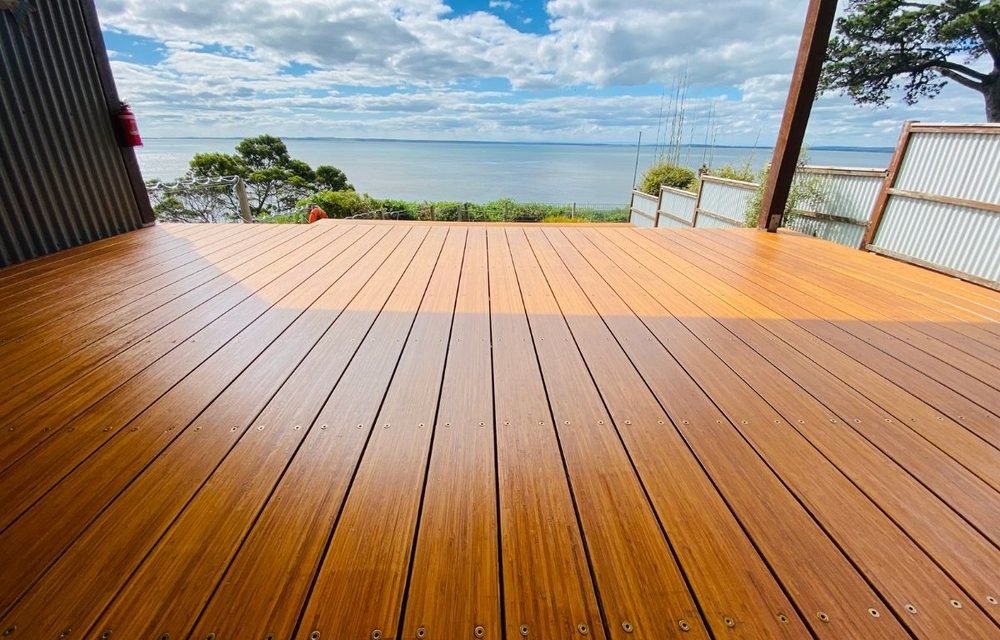
Our deck staining Melbourne service is for when you want to change, deepen or even out your deck's colour while still showing the timber grain. Staining is the service people want when the deck's colour is the problem: Merbau that's drifted orange, a deck that clashes with new paving or cladding, mixed or replaced boards that don't match, or timber that's simply never had the depth of colour the owner wanted. Where deck oiling is about maintaining and protecting the timber's natural look, staining a deck is about deciding what that look should be.
It's also the service where preparation is least forgiving. Stain shows exactly what's underneath it — every patch of old coating, every uneven sanding pass. Which is why our staining jobs are quoted as a system, not a coat.
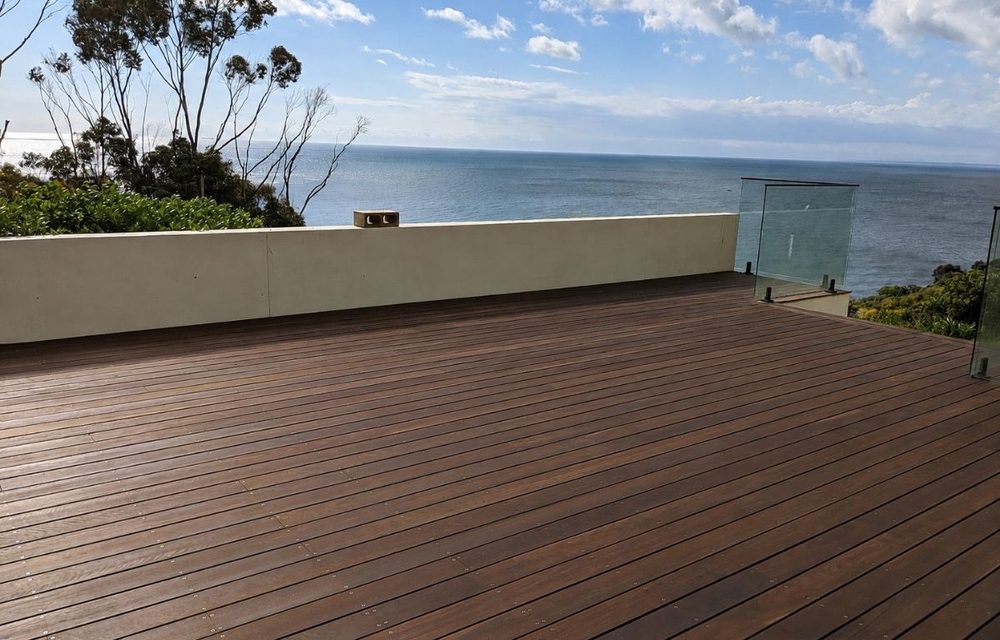
When Staining Is the Right Call
Staining wins in four situations we see constantly across Melbourne. Colour correction: the timber has weathered or discoloured unevenly and a pigmented finish unifies it. Style change: the house has been painted or renovated and the deck's colour no longer fits. Mixed timber: repairs or extensions have left visibly different boards — a stain brings them to one colour (we handle the board replacement side through deck repairs first). Longevity: you want the finish to last longer between coats — darker stains carry more pigment, and more pigment means more UV protection. If what you actually want is a solid, opaque colour that hides the grain entirely, that's the painting conversation — our deck painting Melbourne page walks through that decision honestly.
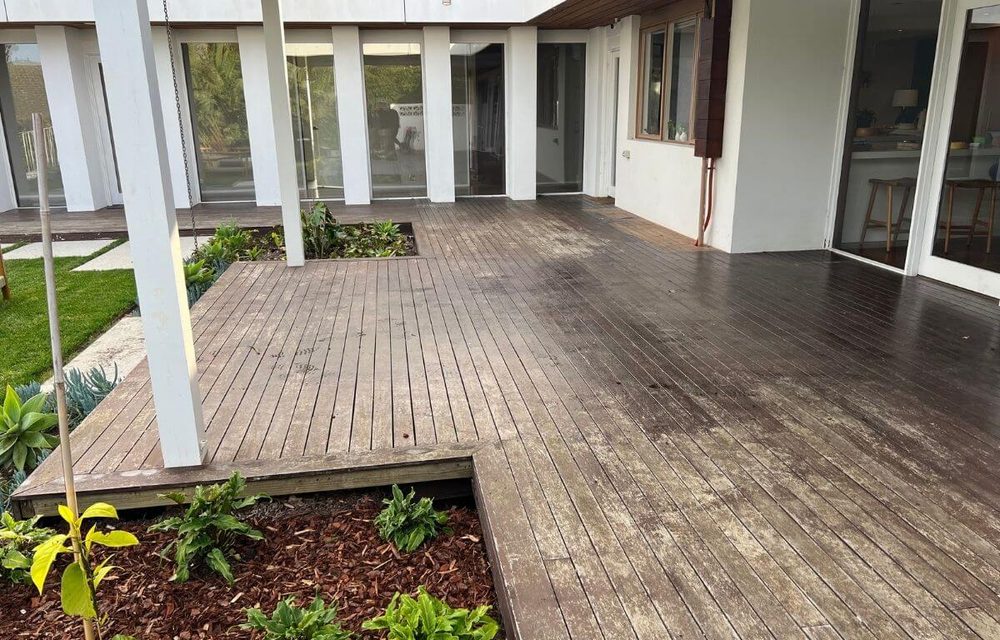 Before
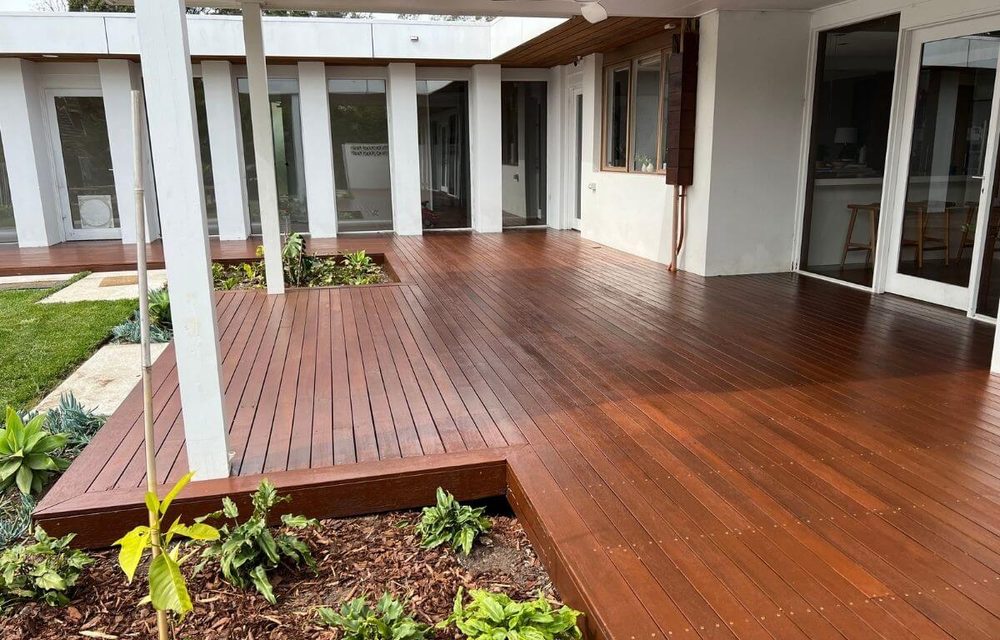 After
AfterHow We Stain a Deck
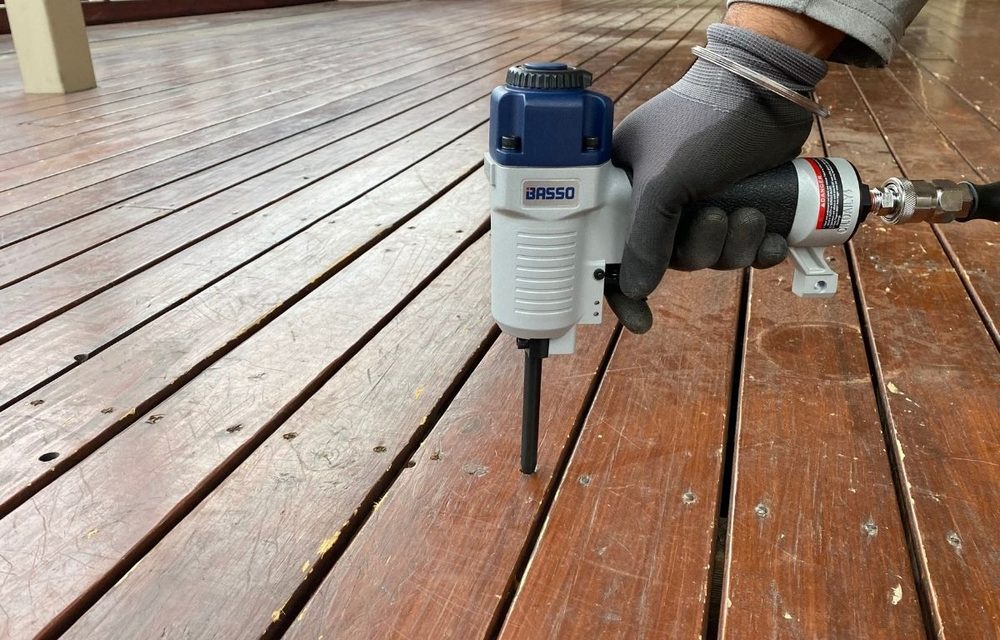
If you've searched "how to stain a deck," you already know the coat itself is the short part. The result is decided by what comes first. One: the deck is assessed and repaired — stain over moving or damaged boards fails along every fault line. Two: the surface is prepared. Depending on the deck's condition that's a deep clean, or sanding back — soft-brush (Terrassen-Blitz) or belt sanding, chosen for the timber, never one-size-fits-all (details on our deck sanding page). Old failed coatings must come off; stain cannot fix what it's applied over. Three: colour is confirmed with a test patch on your actual timber — the same stain reads differently on Merbau, Jarrah and Pine, and a sample pot decision beats a full-deck surprise. Four: the stain is applied in the right weather window and cured properly before the deck goes back into service.
Choosing Deck Stain Colours for Melbourne Timber
Colour choice is where we add the most value, because we've seen every one of these decisions play out over years, not weeks. The reliable principles: darker colours last longer (pigment is sunscreen for timber) and hide wear better between coats; mid-brown and timber-tone stains are the safest match with Melbourne's dominant Merbau and hardwood palette; very pale or grey-wash stains look stunning but need more frequent maintenance in full sun; and semi-transparent stains age more gracefully than heavily built ones, because they wear rather than peel. Ranges like Feast Watson publish their full colour cards, and we bring physical samples to test on your boards — the only place a colour decision should be made.
Verticals, Posts and Handrails
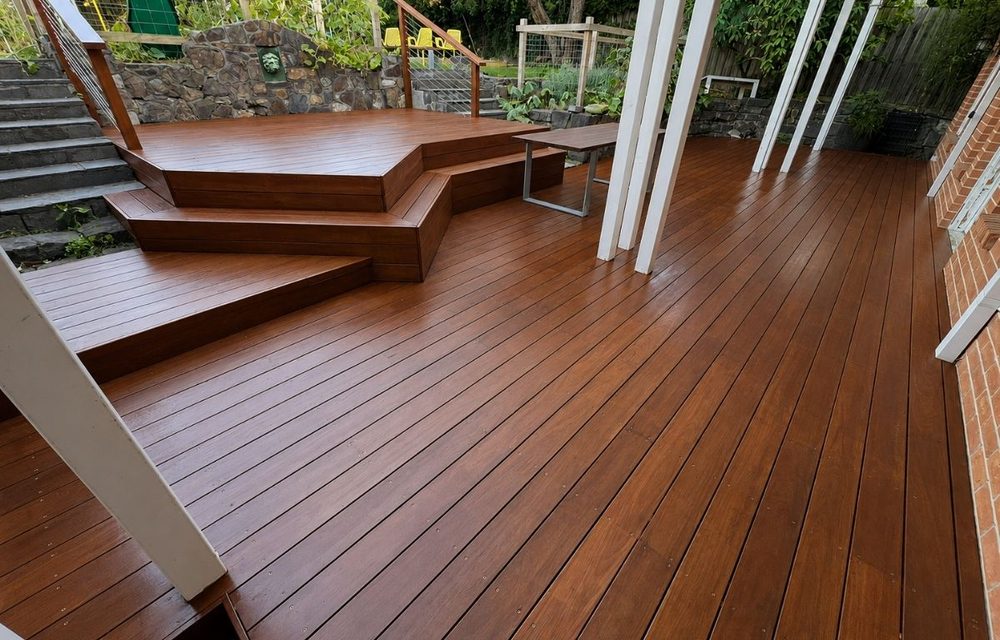
A properly stained deck includes everything attached to it. Handrails, posts, balustrades and privacy screens weather differently to the deck surface — less foot traffic, more sun on some faces — and staining them with the deck is what makes the whole structure read as one finish. It's also the moment to fix any wobbly rails or loose posts, which we handle as part of the preparation rather than staining over problems.
Melbourne Weather and Staining
Like every deck coating, stain wants Melbourne's mild windows — spring and autumn are ideal, with dry days and moderate temperatures so the stain penetrates and cures evenly instead of flashing off a hot board or sitting on a damp one. We schedule staining jobs around the forecast because an even cure is what separates a deck that looks professionally finished from one with lap marks and patchy sheen. UV is the other Melbourne factor: it's the main force fading any coloured finish, which loops back to the pigment rule — the darker the stain, the longer it holds.
Deck Staining FAQs
What's the difference between staining and oiling a deck?
Oiling maintains and protects the timber's natural look; staining changes or deepens its colour while still showing the grain. Many modern products blur the line — pigmented oils are effectively both — and we'll recommend based on the look you want.
Can you stain a deck a completely different colour?
Within timber tones, yes — including going significantly darker, which also improves UV protection. Going dramatically lighter than the timber's natural colour is where stain reaches its limit and the conversation shifts toward opaque finishes.
Do you need to sand a deck before staining?
Usually, yes — especially if there's any previous coating. Stain applied over old finishes or grey weathered timber gives patchy colour and poor adhesion. The test patch tells us exactly how much preparation your boards need.
How long does deck stain last in Melbourne?
Expect 12–24 months before a maintenance coat, exposure and colour depending. Darker stains at the longer end, pale stains in full sun at the shorter. A maintenance coat on a stained deck is a clean-and-recoat, not a start-again.
Get a Free Deck Staining Quote
Send us photos of your deck and tell us the colour direction you're thinking — we'll recommend the right stain for your timber, bring samples to test on your boards, and give you a fixed price. No upfront payment, 12-month workmanship warranty.
Get a Free Quote or call 0409 175 333
Torn between staining, oiling or painting? Contact Melbourne Deck Masters with a few photos — we'll tell you what we'd do on your timber and why.