Timber Deck Sanding in Melbourne: Preparation Is Everything
Every coating conversation on this site ends at the same place: the finish is only as good as the surface under it. Deck sanding is that surface. Sand a deck properly and the oil or stain that follows penetrates evenly, bonds hard and lasts its full life. Sand it badly — or skip it when it was needed — and the best product in the shop fails within a season.
It's also the stage where decks come back from the dead. Grey, weathered boards aren't dead timber; they're timber wearing a millimetre of UV-damaged surface. Sanding removes that layer and exposes the fresh timber underneath — which is why timber deck sanding is the heart of every full deck restoration we do.
Two Methods, One Rule: Match the Method to the Deck
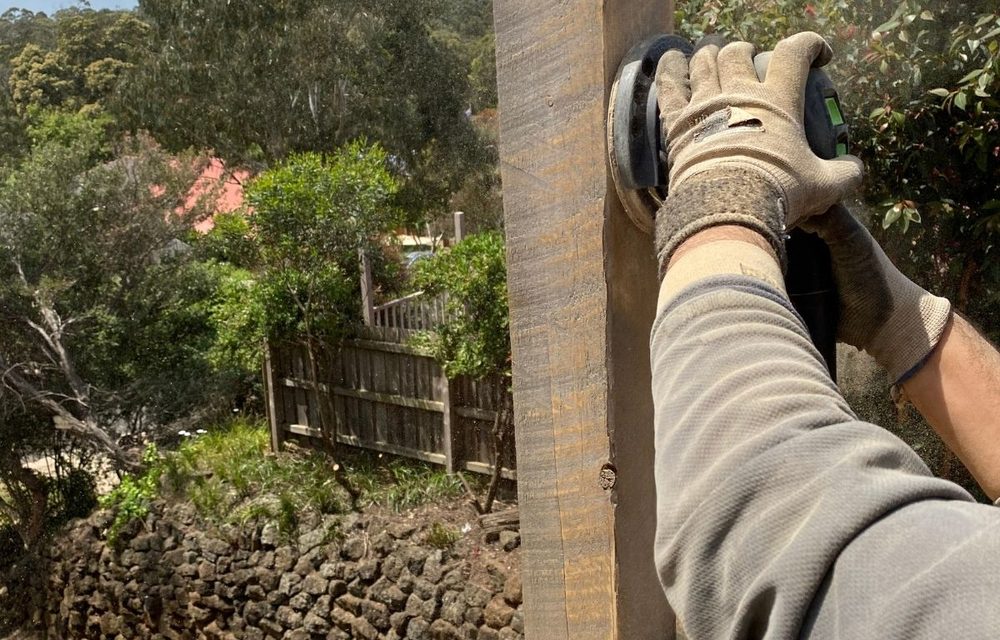
Terrassen-Blitz soft-brush sanding. Our German soft-brush system is the gentler of the two: rotating brush heads clean and refine the timber surface while extracting the dust as they go — no chemical strippers, no water, and dramatically less mess than conventional sanding. It excels on decks where the boards are fundamentally sound: refreshing weathered surfaces, keying back an existing finish before re-coating, and cleaning up timber without stripping more material than the job needs. Because it follows the timber's contours rather than cutting a flat plane, it's also kind to older boards and detailed areas.
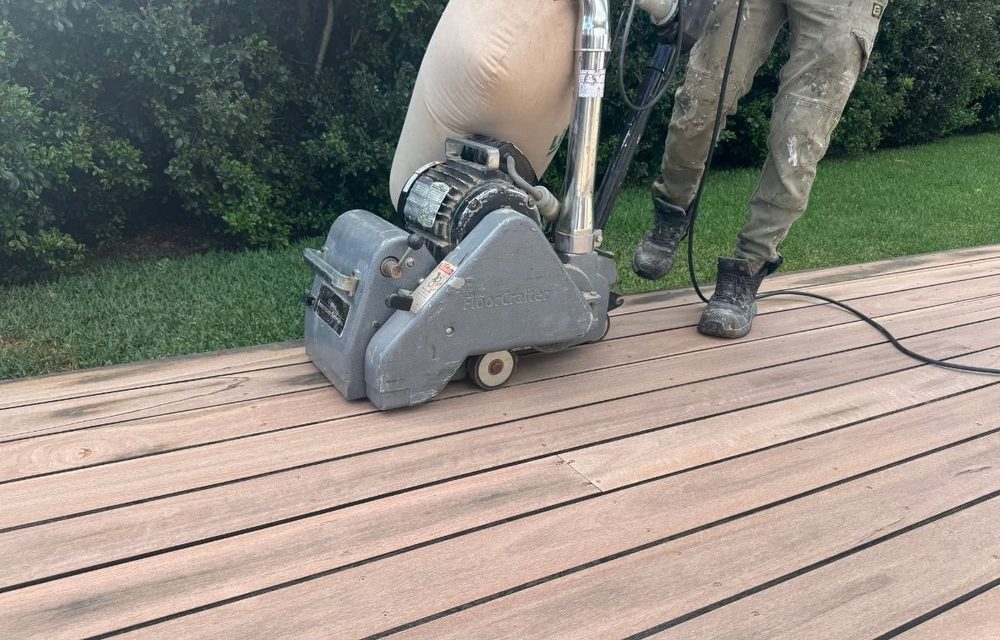
Abrasive belt sanding. Some decks need more than refinement — thick failed coatings, deep greying, cupped or uneven boards, rough or splintered surfaces. That's belt sanding territory: progressively finer abrasives that cut the surface back to clean, level, bare timber. It removes more material and takes more care around nails and screws (every fixing gets punched or driven below the surface first), but for a deck that's had years of neglect it's the only honest path back.
Which one does your deck need? That's the assessment we make from your photos, and plenty of jobs use both — belt sanding to recover the worst boards, soft-brush to refine and finish the rest. What we'll never do is claim one method fits every deck, because it doesn't.
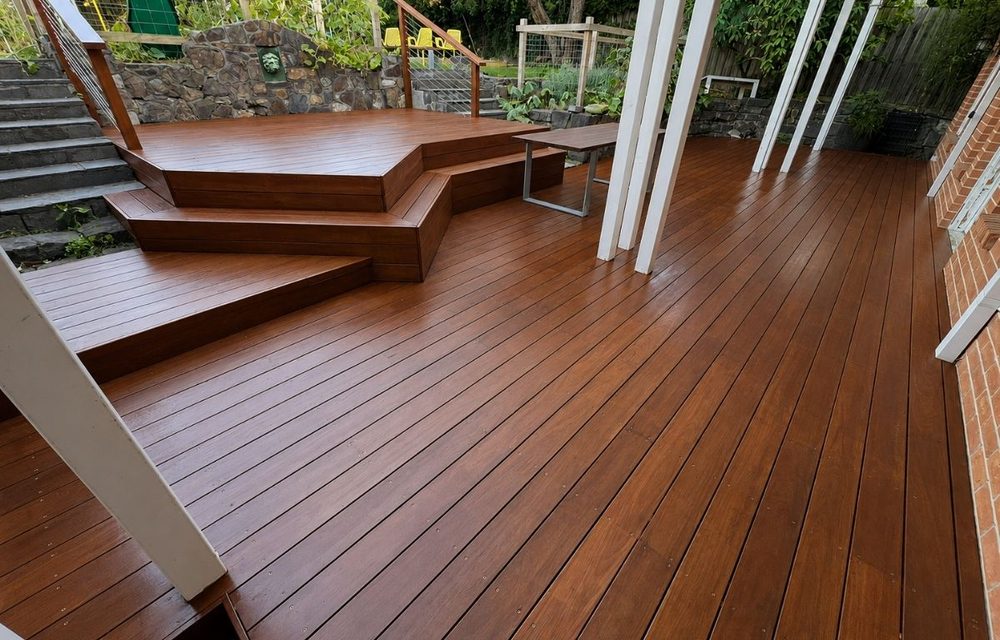
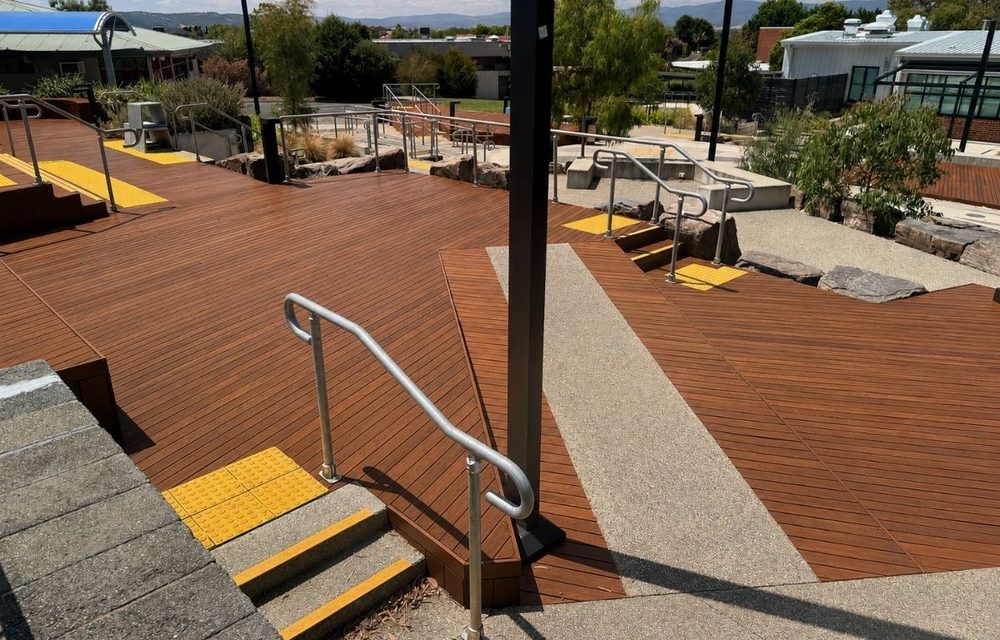
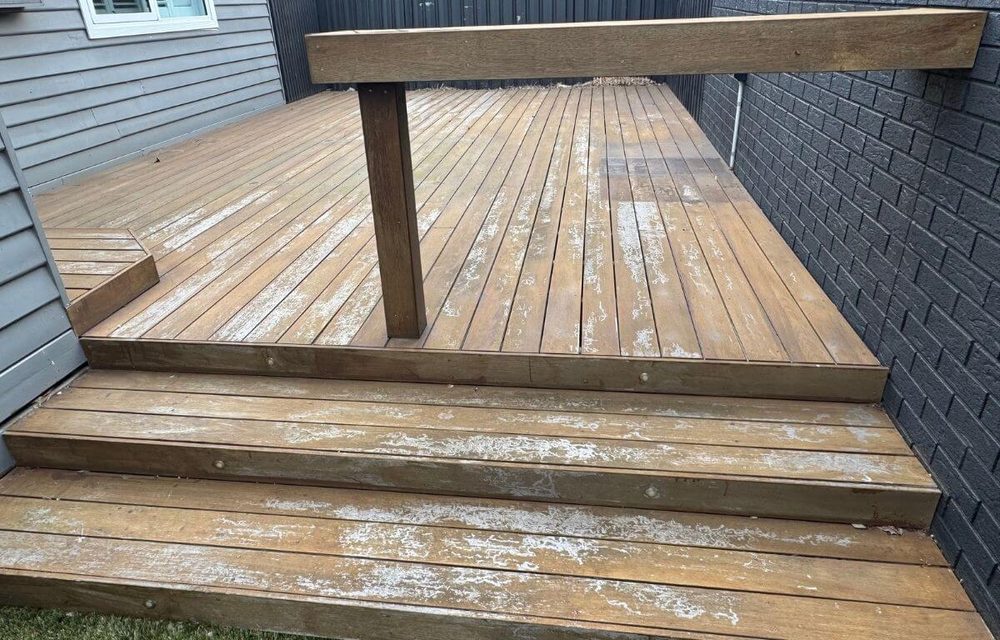 Before
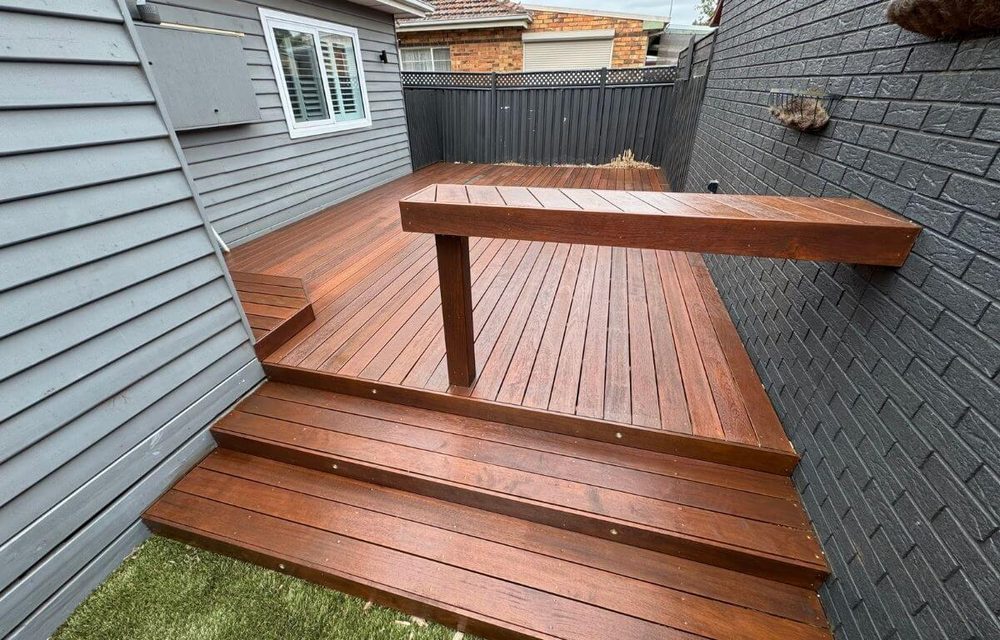 After
AfterWhy the Soft-Brush System Is Worth Knowing About
The Terrassen-Blitz system is genuinely rare in Melbourne, and for the right decks it changes the experience of the job: dust is extracted at the head instead of settling over your outdoor furniture and garden, there's no chemical stripping involved, and no water — which means no drying delay before coating. For occupied homes, decks near pools, and clients sensitive to dust and chemicals, it's a meaningful difference. It's the reason clients find us; the reason they stay is that we also know when it's not the right tool.
Deck Sanding and Oiling: The Package That Makes Sense
Sanding is almost never the destination — it's the preparation for what follows. Freshly sanded timber is beautiful and completely unprotected; Melbourne UV starts greying exposed boards within weeks. That's why most of our sanding work is booked as deck sanding and oiling together: sand, then coat while the timber is at its most receptive. Whether the finish is an oil, a sealer or a colour change, our deck oiling and sealing and deck staining pages cover the options — and any damaged boards or raised fixings get handled through deck repairs before the sanders come out, because sanding over problems just makes smooth problems.
Melbourne Timber, Melbourne Conditions
Sanding a deck in Melbourne means working with the local timber palette: dense Merbau that sands to a superb finish but demands sharp abrasives; Jarrah and Spotted Gum that are harder again; and older pine decks that need a far lighter touch. It also means respecting what the climate has done to the boards — sun-side surfaces are often more degraded than shaded ones, and the sanding plan adjusts board by board. For the technical detail on Australian decking species and their properties, WoodSolutions is the reference we point people to.
Deck Sanding FAQs
Does every deck need sanding before oiling?
No — and we'll tell you when yours doesn't. A deck with a sound existing finish often needs only a proper clean and re-coat. Sanding earns its cost when the coating has failed, the timber has greyed, or the surface has roughened.
What's the difference between soft-brush and belt sanding?
Soft-brush (Terrassen-Blitz) refines and cleans the surface with dust extraction and no chemicals or water — ideal for sound boards. Belt sanding cuts back to bare, level timber — necessary for failed coatings and badly weathered decks. We choose per deck, and often combine both.
Is deck sanding messy?
With the soft-brush system, remarkably little — dust is extracted at the head. Belt sanding produces more dust and we manage it with extraction and containment, but it's the trade-off for the deeper cut some decks need.
Can you sand out cupped or uneven boards?
Often, yes — belt sanding can level moderate cupping. Severely cupped, cracked or soft boards are replaced first, which is why sanding quotes start with a condition assessment.
Can you sand a deck with nails or screws sticking out?
Raised nails and screws must be fixed first — they damage sanding equipment and ruin the finished surface. Checking and punching or driving every fixing below the surface is a standard step before we choose between soft-brush and belt sanding.
How soon after sanding should the deck be coated?
As soon as conditions allow — freshly sanded timber is unprotected and starts weathering immediately. We book sanding and coating as one job so the deck is never left bare.
Get a Free Deck Sanding Quote
Send us photos of your deck and we'll tell you whether it needs the soft-brush system, belt sanding, or just a clean — plus a fixed price for the sand-and-coat package. No upfront payment, 12-month workmanship warranty.
Get a Free Quote or call 0409 175 333
Curious whether your deck is a soft-brush or belt-sanding job? Contact Melbourne Deck Masters with photos — we'll tell you straight, and explain why.